

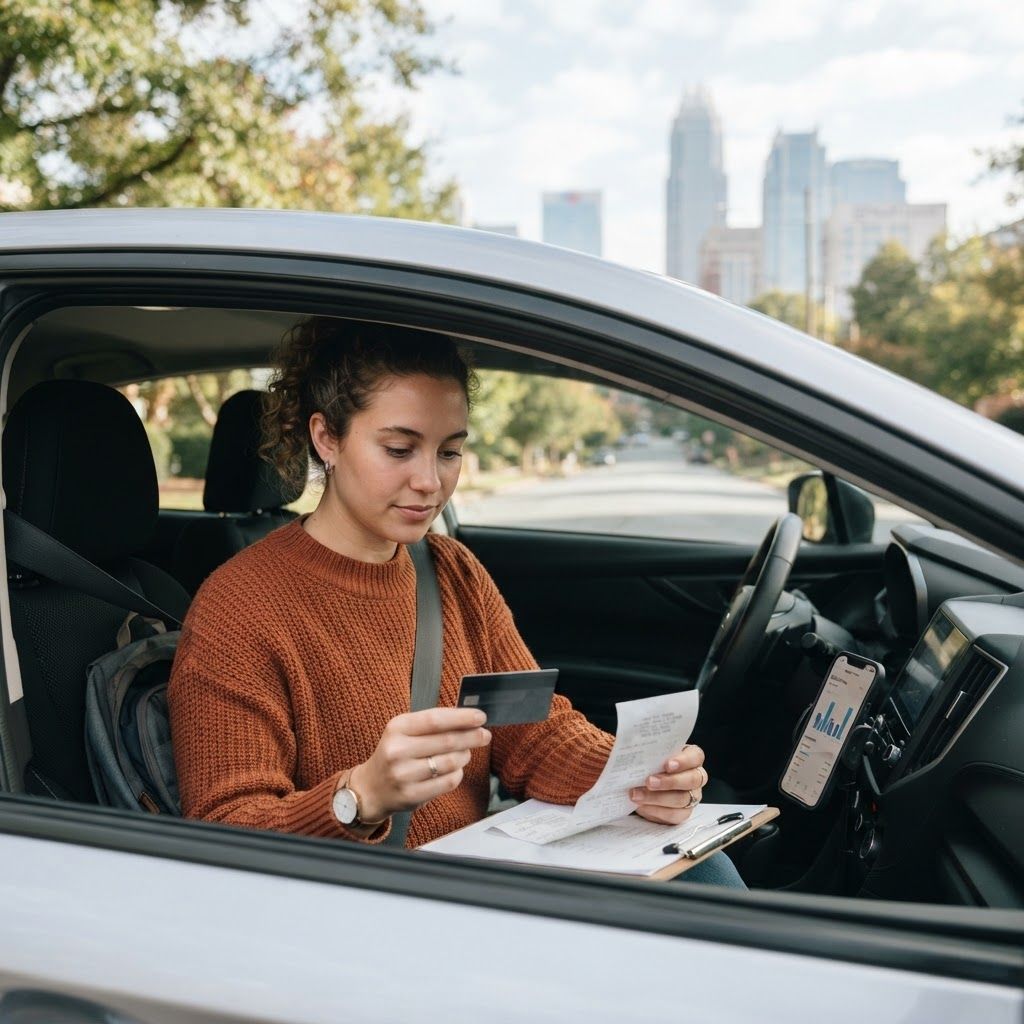
Best Cashback Credit Cards for Charlotte Gig Workers Buying Gas and Groceries in 2026
If you drive for DoorDash, Uber Eats, Instacart, Shipt, or other delivery platforms around Charlotte, North Carolina, your gas and grocery purchases can quietly reduce your take-home pay. The right cashback card can return money on those recurring costs, but only if the rewards category, annual fee, payment schedule, and redemption rules fit the way you work.
This guide compares practical card features for Charlotte gig workers in 2026. It is not a recommendation to apply for a specific product, and credit approval, APRs, welcome offers, and terms vary by issuer. Always read the current pricing and disclosures before applying.
For context, Charlotte has a large financial-services and fintech economy, while delivery drivers often combine several apps and work across Mecklenburg, Union, and Cabarrus counties. That makes flexible rewards especially useful: you may buy fuel near Uptown, groceries in South End, and supplies at a warehouse club on the same shift.
1. Start with the spending categories you actually use
Do not choose a card because a headline advertises a high rate in a category you rarely use. Track four weeks of fuel, groceries, parking, vehicle maintenance, phone service, and delivery-app expenses. A driver who spends $250 per month on gasoline may benefit more from a simple 3% gas reward than from a rotating 5% category that requires activation.
Pro tip: Separate personal groceries from customer orders and business supplies in your bookkeeping. Cashback is not a tax deduction, and a reward does not replace accurate mileage and expense records.
Result: your real spending pattern becomes the decision filter instead of a flashy promotion.
- Gas stations and EV charging
- Supermarkets and warehouse clubs
- Phone, data, and navigation services
- Vehicle repairs and roadside purchases
2. Choose a flat-rate card when your routes change daily
A flat-rate cash-back card is often the least complicated option for drivers who move between neighborhoods and merchants. Cards in this group generally return a fixed percentage on eligible purchases, so you do not need to remember which category is active this quarter.
This structure can work well when you buy gas at different chains, shop for groceries at different stores, or use a mix of delivery platforms. The trade-off is that a flat-rate card may earn less than a category card at a specific gas station or supermarket.
Pro tip: Compare the effective annual return after any annual fee. For example, a 2% card producing $600 in yearly rewards is not automatically better than a no-fee card with a targeted bonus that produces $700 for your actual spending.
Result: fewer rules and more predictable rewards during busy Charlotte weeks.
3. Consider a gas-focused card if fuel is your largest expense
Gas can be one of the biggest variable costs for a delivery driver, especially when routes include airport runs, suburban orders, or long gaps between stacked deliveries. A gas-focused card may offer elevated rewards at fuel stations, but check how the issuer defines the merchant category. A station-operated convenience store, warehouse club, or mobile wallet transaction may code differently.
Charlotte drivers should also account for traffic and route length. A higher reward rate does not make an inefficient route profitable. Use the card as a small margin improvement alongside mileage tracking, order selection, and maintenance planning.
Pro tip: Test one normal month before estimating yearly rewards. Include only eligible fuel purchases and subtract any interest paid if you carry a balance.
Result: a reward strategy that reflects actual miles driven instead of an optimistic estimate.
4. Look closely at grocery definitions and warehouse clubs
Many drivers buy snacks, drinks, and household food while working, while Instacart shoppers may pay for customer orders using a platform-provided method. A grocery reward on your personal card generally applies to your own eligible purchases, not every transaction connected to delivery work.
Read the issuer’s merchant-category exclusions. Superstores, warehouse clubs, convenience stores, and specialty markets may not qualify as supermarkets. If your household shops at Costco, Sam’s Club, or another warehouse club, a card that explicitly rewards wholesale clubs could be more useful than a supermarket-only card.
Pro tip: Never mix a customer’s payment method with your personal credit card to chase rewards. Follow the delivery platform’s rules and keep receipts for legitimate personal or business expenses.
Result: fewer reward surprises and cleaner records at tax time.
5. Use a business card only when the bookkeeping benefits are real
Some gig workers prefer a small-business credit card because it keeps delivery-related purchases separate from household spending. A sole proprietor may qualify for certain business products, but eligibility rules vary and approval is never guaranteed. The card does not turn personal expenses into business expenses.
For a Charlotte driver, a dedicated account can simplify monthly reconciliation of gas, phone service, parking, supplies, and tolls. However, a separate checking account, spreadsheet, or bookkeeping app may provide similar organization without adding another annual fee or credit inquiry.
Pro tip: Ask whether employee cards, expense exports, virtual cards, and category controls matter to your actual operation before paying for premium features.
Result: better records when separation is useful, without paying for features you will not use.
6. Protect the cashback by paying the balance in full
Cashback is only valuable when interest does not erase it. If a driver carries a balance at a high APR, even a strong reward rate can become a net loss. Set autopay for at least the statement balance if your cash flow allows, and keep a small operating reserve for slower weeks, repairs, and insurance.
Do not use a new-card welcome bonus as permission to spend beyond your normal budget. If a bonus requires thousands of dollars in purchases, calculate whether those purchases would happen anyway.
Pro tip: Schedule a weekly transfer from your delivery income to cover card spending. Weekly payments can make cash flow easier to monitor, though you should still review the statement every month.
Result: rewards remain rewards instead of becoming expensive borrowed money.
7. Watch annual fees, redemption minimums, and expiration rules
A card with a premium annual fee may provide travel or purchase protections that are irrelevant to a local delivery driver. For a simple cashback setup, check whether rewards can be redeemed as a statement credit, whether there is a minimum redemption amount, and whether points expire after inactivity or account closure.
Also check foreign transaction fees only if you travel, balance-transfer fees if you are considering moving debt, and late-payment policies. Rewards programs can change, so save the issuer’s current terms and review them when your annual fee posts.
Pro tip: Put a calendar reminder 45 days before the annual-fee renewal date. That gives you time to compare the card’s value with a no-fee alternative.
Result: you avoid losing a year of rewards to fees or forgotten program rules.
8. A simple Charlotte driver comparison method
Build a one-page comparison with five columns: eligible gas reward, eligible grocery reward, base reward, annual fee, and payment or redemption limits. Then multiply each rate by your realistic monthly spend. Do not include customer purchases, reimbursed items, or spending you would not normally make.
For example, suppose you spend $300 per month on fuel and $450 on household groceries. A 3% fuel reward and 2% grocery reward would produce about $198 per year before fees, assuming every purchase qualifies. A 2% flat-rate card would produce about $180 on the same $750 monthly total. The difference is only $18, so a complicated program may not be worth it unless it adds useful protections or a legitimate bonus.
Pro tip: Recalculate after three months. Your best card can change if you switch from delivery work to rideshare, buy an EV, or spend more time outside Charlotte.
Result: a decision based on dollars, not marketing language.
Conclusion: keep the strategy boring and profitable
The best cashback credit cards for Charlotte gig workers buying gas and groceries in 2026 are the ones that match real spending, have manageable fees, and can be paid in full. Start with a flat-rate card if simplicity matters, consider a gas or grocery category card if the math is clearly better, and use a dedicated business account only when it genuinely improves your records.
For more practical money and technology ideas, see our guides on energy-saving apps for Denver apartment renters and cutting apartment electricity bills in Minneapolis. Those savings can complement, but never replace, careful mileage and expense tracking.
Frequently Asked Questions
What is the best cashback rate for gas for a Charlotte gig worker?
There is no universal best rate. Compare the eligible gas percentage, annual fee, merchant-category rules, and whether you pay the balance in full. A simple no-fee card can beat a higher-rate card if the higher rate has restrictions.
Can delivery drivers use a personal credit card for gas?
Yes, many drivers use a personal card for their own eligible fuel purchases, but they should follow platform rules and keep personal, customer, and business records separate.
Do grocery rewards apply at warehouse clubs?
Not always. Warehouse clubs and superstores may use a different merchant category from supermarkets. Read the issuer’s current rewards terms before applying.
Is a business credit card required for gig work?
No. Some independent workers choose one for bookkeeping, but a separate account or spreadsheet may be enough. Eligibility and tax treatment depend on your situation.
Should I carry a balance to earn cashback?
No. Interest can quickly exceed the rewards. Cashback generally works best when you pay the statement balance by the due date and spend only within your operating budget.