

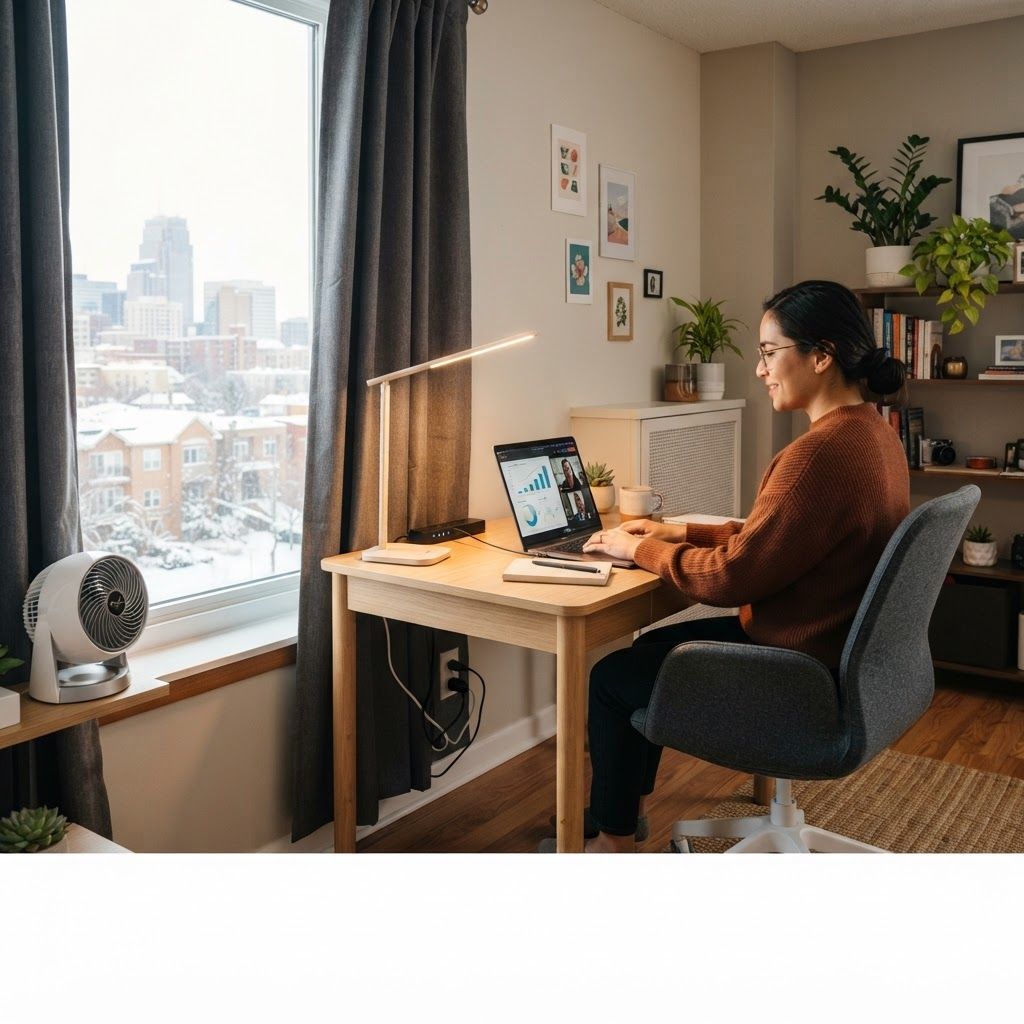
Minneapolis Apartment Energy Savings for Work-From-Home Renters
If you are searching for Minneapolis apartment energy savings for work-from-home renters, start with changes that lower electricity use without risking your security deposit. Minneapolis renters can often reduce the cost of a home office with smart power controls, better window coverage, and utility-program research rather than permanent renovations.
Audit Your Work-From-Home Energy Load
Start with the equipment that runs for eight or more hours each day: your laptop, monitor, speakers, router, task lighting, printer, and cooling or heating accessories. A plug-in electricity monitor can show which devices draw power while idle; inexpensive models from retailers such as Home Depot or Amazon often cost about $15 to $25. Check your lease and utility bill first so you know whether electricity is separately metered.
Pro tip: Make one change at a time so you can see what actually affects your bill.
Result: a lower-energy workspace that still works for long remote shifts.
- Use removable or plug-in solutions first.
- Check your lease before changing thermostats or fixtures.
- Compare kWh usage, not only the dollar total.
Use a Smart Power Strip at the Desk
A smart power strip lets a monitor and accessories shut down when the main computer sleeps. Look for models with a control outlet, surge protection, and at least six outlets; typical prices range from $25 to $45. Keep the router on a separate outlet because turning it off can interrupt security devices and overnight updates.
Pro tip: Make one change at a time so you can see what actually affects your bill.
Result: a lower-energy workspace that still works for long remote shifts.
- Use removable or plug-in solutions first.
- Check your lease before changing thermostats or fixtures.
- Compare kWh usage, not only the dollar total.
Claim Xcel Energy Options Available to Renters
Xcel Energy Minnesota lists energy-saving programs for both homeowners and renters, including smart thermostat and home rebate information. Eligibility varies by equipment, account, and building, so check the current program page before buying anything. Ask your property manager whether the building has restrictions on thermostat replacement or HVAC controls.
Pro tip: Make one change at a time so you can see what actually affects your bill.
Result: a lower-energy workspace that still works for long remote shifts.
- Use removable or plug-in solutions first.
- Check your lease before changing thermostats or fixtures.
- Compare kWh usage, not only the dollar total.
Stop Window Heat Loss Without Damage
Thermal curtains, removable weather-seal film, and tension-mounted cellular shades can reduce drafts without drilling. A good setup costs roughly $30 to $100 per window depending on size. Close coverings after sunset in winter and during the hottest afternoon hours in summer, while leaving safe ventilation when needed.
Pro tip: Make one change at a time so you can see what actually affects your bill.
Result: a lower-energy workspace that still works for long remote shifts.
- Use removable or plug-in solutions first.
- Check your lease before changing thermostats or fixtures.
- Compare kWh usage, not only the dollar total.
Make Heating and Cooling Work Smarter
In Minneapolis winters, a small temperature change can matter more than constantly adjusting the thermostat. Use a programmable schedule approved by your landlord, keep vents clear, and place a compact fan to move air around your desk rather than lowering the whole apartment temperature. Never cover a radiator or block a forced-air register.
Pro tip: Make one change at a time so you can see what actually affects your bill.
Result: a lower-energy workspace that still works for long remote shifts.
- Use removable or plug-in solutions first.
- Check your lease before changing thermostats or fixtures.
- Compare kWh usage, not only the dollar total.
Choose Low-Wattage Office Lighting
Replace a desk lamp bulb with an LED rated around 6 to 10 watts and position it close to the work surface. LEDs create less heat than incandescent bulbs, which can also reduce cooling demand in summer. Turn off overhead lights in empty rooms and use daylight when glare and screen comfort allow it.
Pro tip: Make one change at a time so you can see what actually affects your bill.
Result: a lower-energy workspace that still works for long remote shifts.
- Use removable or plug-in solutions first.
- Check your lease before changing thermostats or fixtures.
- Compare kWh usage, not only the dollar total.
Cook and Wash During Lower-Use Hours
If your building or utility plan has time-based rates, run laundry and the dishwasher during the cheaper period shown on your plan. Otherwise, prioritize full loads and use air-dry settings when practical. An air fryer, toaster oven, or microwave can use less energy than heating a full-size oven for one serving, but compare the appliance label and cooking time.
Pro tip: Make one change at a time so you can see what actually affects your bill.
Result: a lower-energy workspace that still works for long remote shifts.
- Use removable or plug-in solutions first.
- Check your lease before changing thermostats or fixtures.
- Compare kWh usage, not only the dollar total.
Track Savings for One Billing Cycle
Write down your starting monthly kWh, install one or two no-drill changes, and compare the next bill under similar weather conditions. Separate behavior savings from price changes by recording both usage and the total dollar amount. A realistic first target for a remote worker is reducing avoidable standby and lighting use before buying expensive equipment.
Pro tip: Make one change at a time so you can see what actually affects your bill.
Result: a lower-energy workspace that still works for long remote shifts.
- Use removable or plug-in solutions first.
- Check your lease before changing thermostats or fixtures.
- Compare kWh usage, not only the dollar total.
A renter-friendly Minneapolis savings plan
For most households, the best order is simple: measure the desk load, add a smart power strip, improve curtains or shades, then investigate current Xcel Energy Minnesota programs. This approach avoids buying gadgets that do not fit your apartment and keeps every upgrade reversible.
Frequently Asked Questions
Can Minneapolis renters apply for energy rebates?
Some Xcel Energy Minnesota programs are available to renters, but requirements depend on the account, equipment, and property. Verify current terms before purchasing.
What is the cheapest no-drill energy upgrade?
A smart power strip or LED bulb is usually an affordable first step, often costing less than $45 combined.
Do thermal curtains save electricity?
They can reduce heat transfer through windows, especially when closed at night in winter and during peak sun in summer.
Should I turn off my Wi-Fi router?
Usually no. Keep the router on if it supports security, work, or connected devices; target monitors and peripherals instead.
How long should I test changes?
Compare at least one full billing cycle and note unusual weather or rate changes.