


You don’t need stacks of coupons or endless apps to save money on groceries.
With food prices rising, learning how to shop smarter can easily cut your bill by 20–30% every month — and it’s simpler than you think.
From meal planning to clever store strategies, small changes make a big difference in your budget.
Here’s how to save money on groceries without using a single coupon, while still eating healthy, fresh, and delicious food every day.
Plan Your Meals Before You Shop
Meal planning is the golden rule of saving.
When you plan what you’ll eat for the week, you avoid impulse buys and wasted food.
Tips:
- Write a weekly menu and shopping list 🛍️
- Stick to recipes that share ingredients
- Cook larger portions to reuse leftovers
💡 Bonus: try “theme nights” like pasta Monday or stir-fry Friday — easy, predictable, and cost-effective.
Shop with a List — and Stick to It
Sounds simple, but it’s incredibly effective.
Supermarkets are designed to tempt you into buying more.
How to resist:
- Never shop hungry 😋
- Keep your list visible (phone or paper)
- Avoid browsing “just to look” aisles
💡 Pro tip: set a spending limit before you go — and challenge yourself to stay under it.

Buy Store Brands Instead of Big Names
Generic or store brands often come from the same producers as famous brands — just in different packaging.
You’ll save: 20–40% on most products, from pasta to cleaning supplies.
💡 Tip: Compare ingredients and quality — often identical to premium versions.
Stock Up on Sales (But Wisely)
Buy staples when they’re discounted — things you’ll actually use.
Good stock-up items:
- Rice, pasta, oats
- Frozen veggies
- Canned beans or tomatoes
- Toilet paper & cleaning products
💡 Avoid: perishable items unless you can freeze them.
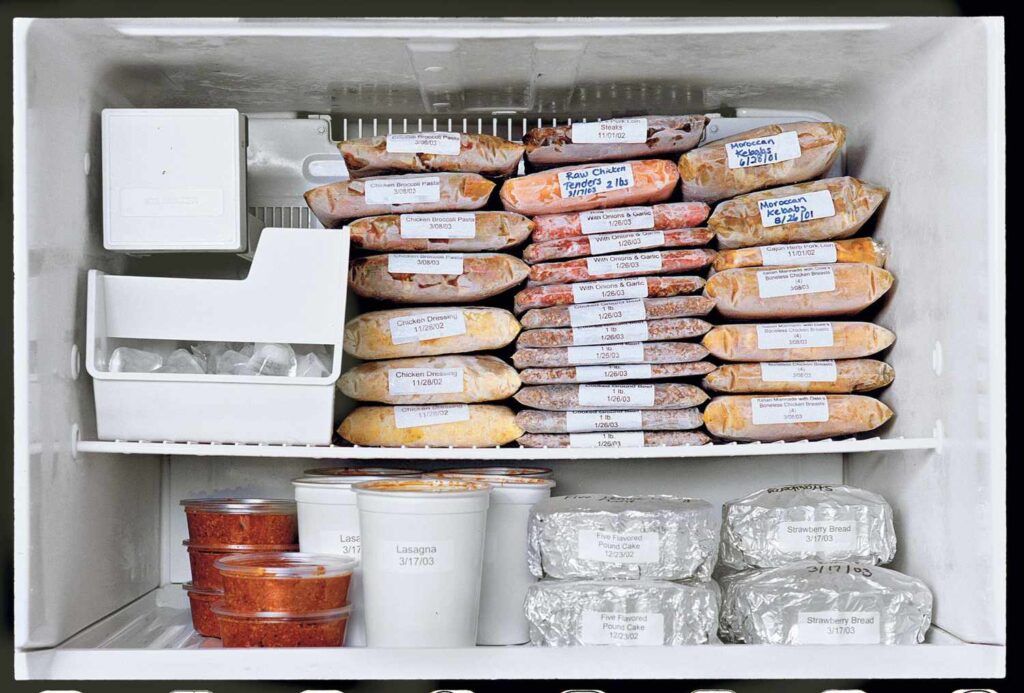
Use Your Freezer to Prevent Waste
Your freezer is your best money-saving ally.
Freeze:
- Bread, cheese, soups, fruit
- Herbs in olive oil cubes
- Leftovers in single portions
💡 Pro tip: label everything with dates — waste less, save more.
Eat More Seasonal Produce
Buying in-season fruits and veggies saves money and tastes better.
Examples:
- Winter: oranges, squash, broccoli
- Summer: berries, tomatoes, corn
💡 Bonus: visit local farmers’ markets near closing time — sellers often drop prices by 30–50%.

Cook from Scratch
Pre-packaged and ready meals cost 3–4x more than homemade.
Start simple:
- Oatmeal vs cereal
- Homemade soup vs canned
- Roast chicken vs deli meat
💡 Tip: batch-cook on Sundays and freeze portions for the week.
Cut Out Drinks and Snacks
Bottled drinks, sodas, and fancy coffee drain budgets fast.
Do this instead:
- Drink water or brew your own coffee
- Keep reusable bottles
- Replace chips with homemade popcorn or fruit
💡 You can save up to $50–100/month just from drinks.

Compare Prices Online
Before heading to the store, check apps or supermarket websites.
Many now show live prices and promotions.
Popular options:
- Flipp (US & Canada)
- Idealo or Trolley.co.uk (UK)
- Google Shopping
💡 Tip: sometimes the store’s own delivery app has lower online-only prices.
Use Leftovers Creatively
Food waste = money waste.
Instead of tossing leftovers, repurpose them into new meals.
Ideas:
- Cooked veggies → omelet or soup
- Rice → stir-fried rice
- Chicken → wraps or salad
💡 Rule: no ingredient left behind!
Saving money on groceries isn’t about cutting quality — it’s about being intentional.
By planning, buying smart, and using what you have, you’ll see real savings without giving up great meals.
Start small this week and track your progress — the results will surprise you (and your wallet).